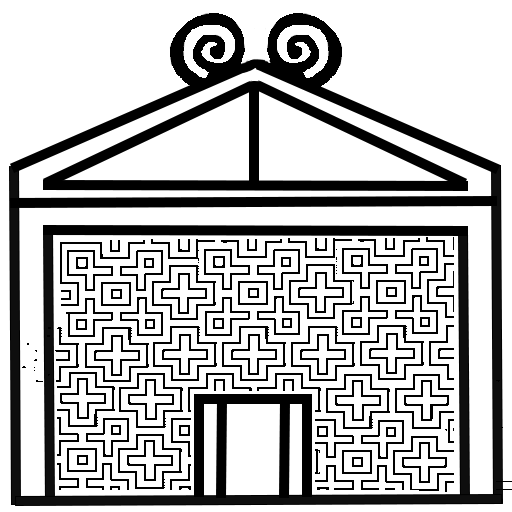
Inscription M-02 on King’s Road

It is carved on an outcrop on the bedrock that stands on the left of the ramped road (King’s Road) that ascends to the plateau. This inscription is thought to be contemporaneous with M-01b (575-550 BCE). It is written boustrophedon, and the first line is dextroverse. → bba ⁝ memevais ⁝ proitavo[s],← k↑iyanaveyos ⁝ akaragayun→ edaes … Read more

Inscription M-03

The inscription is engraved on a projection above the stepped altar 27 in Midas City. The dextroverse line is mutilated on the left, on the right, and at the top. [‑‑‑] abas iṃaṇ akio[‑‑‑] References:Brixhe, C. & M. Lejeune. 1984. Corpus des inscriptions paléo-phrygiennes, Paris.Obrador-Cursach, B. 2018. Lexicon of the Phrygian Inscriptions, Thesis, Barcelona. Images:Ertuğrul Anıl, 2020

Inscription M-04 on the Throne Monument

It is a two-line inscription carved on the stepped altar 28, so-called the Throne Monument, in Midas City. The upper line is written dextroverse, and the lower line is sinistroverse.  ạkinanogavaṇ ⁞ tiyesmoḍroṿanak ⁞ avarạ[.?] References:Brixhe, C. & M. Lejeune. 1984. Corpus des inscriptions paléo-phrygiennes, Paris.Obrador-Cursach, B. 2018. Lexicon of the Phrygian Inscriptions, Thesis, Barcelona. Images:D. Berndt, … Read more

Inscription M-05

The sinistroverse inscription is on the remains of the rock-cut pediment of the Broken Monument in Midas City.   apelan (uac.) mekas tevanọ[‑‑‑] * uac. Empty space. (Possibly due to a natural hole on the rock.) References:Brixhe, C. & M. Lejeune. 1984. Corpus des inscriptions paléo-phrygiennes, Paris.Obrador-Cursach, B. 2018. Lexicon of the Phrygian Inscriptions, Thesis, Barcelona. Images:Bora Bilgin, … Read more

Inscription M-06

It is carved on the stepped altar 14 in Midas City. There is a two-line inscription, and both lines are sinistroverse.   ṛekun ⁝ deiatiteeạ.? davoi iman References:Brixhe, C. & M. Lejeune. 1984. Corpus des inscriptions paléo-phrygiennes, Paris.Obrador-Cursach, B. 2018. Lexicon of the Phrygian Inscriptions, Thesis, Barcelona. Images:D. Berndt, 2002

Inscription M-07

It is a single-word dextroverse inscription engraved on the underside of a vault at the deep end of the cave which is accessed by rock stairs at the north east of Midas plateau. It was discovered by Haspels in 1938.   tolos References:Brixhe, C. & M. Lejeune. 1984. Corpus des inscriptions paléo-phrygiennes, Paris.Obrador-Cursach, B. 2018. Lexicon of the … Read more

Inscription M-08

The sinistroverse written inscription is engraved on the rock to the right of the road where the ancient road on the west side of the Midas City plateau cuts the rock deeply and ascends towards the southwest of the plateau.  … … ṣạbas References:Brixhe, C. & M. Lejeune. 1984. Corpus des inscriptions paléo-phrygiennes, Paris.Obrador-Cursach, B. 2018. Lexicon … Read more

Inscription M-09

The inscription is written on an architectural fragment that was found in 1913 in a ravine at the south of the Midas City plateau. The current whereabouts of the fragment are unknown. It is known only from a drawing that was done by Calder, who found the fragment. It is written dextroverse.  [‑‑‑] ạkeṇ?ano[‑‑‑] References:Brixhe, … Read more

Inscription M-10

The dextroverse inscription is engraved on a block of stone that was found by G. Toklu in 1970 in the Midas City during a cleaning operation. The stone is kept at the Eskişehir Museum. [‑‑‑]gen ⁝ [‑‑‑] or [‑‑‑]ṭen ⁝ [‑‑‑] References:Brixhe, C. & M. Lejeune. 1984. Corpus des inscriptions paléo-phrygiennes, Paris.Obrador-Cursach, B. 2018. Lexicon of the … Read more