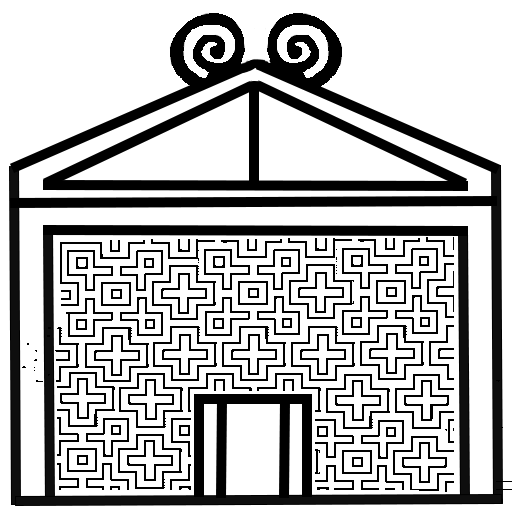
Inscription M-07

It is a single-word dextroverse inscription engraved on the underside of a vault at the deep end of the cave which is accessed by rock stairs at the north east of Midas plateau. It was discovered by Haspels in 1938.   tolos References:Brixhe, C. & M. Lejeune. 1984. Corpus des inscriptions paléo-phrygiennes, Paris.Obrador-Cursach, B. 2018. Lexicon of the … Read more

Inscription M-08

The sinistroverse written inscription is engraved on the rock to the right of the road where the ancient road on the west side of the Midas City plateau cuts the rock deeply and ascends towards the southwest of the plateau.  … … ṣạbas References:Brixhe, C. & M. Lejeune. 1984. Corpus des inscriptions paléo-phrygiennes, Paris.Obrador-Cursach, B. 2018. Lexicon … Read more

Inscription M-09

The inscription is written on an architectural fragment that was found in 1913 in a ravine at the south of the Midas City plateau. The current whereabouts of the fragment are unknown. It is known only from a drawing that was done by Calder, who found the fragment. It is written dextroverse.  [‑‑‑] ạkeṇ?ano[‑‑‑] References:Brixhe, … Read more

Inscription M-10

The dextroverse inscription is engraved on a block of stone that was found by G. Toklu in 1970 in the Midas City during a cleaning operation. The stone is kept at the Eskişehir Museum. [‑‑‑]gen ⁝ [‑‑‑] or [‑‑‑]ṭen ⁝ [‑‑‑] References:Brixhe, C. & M. Lejeune. 1984. Corpus des inscriptions paléo-phrygiennes, Paris.Obrador-Cursach, B. 2018. Lexicon of the … Read more

Inscription M-11

About 20 meters north of Altar 32 is a single line dextroverse inscription on the upper edge of a flattened surface of a rock. Due to weathering, the inscription is difficult to see with the naked eye. It was first noticed in 2002 by the Midas city guide/guard Veysel Gündoğdu and subsequently examined and published … Read more

Areyastis Phrygian Inscriptions

Inscription W-01aIt consists of three lines surrounding the triangular pediment. The lower horizontal line (I), including also the three letters that are incised on the right adjacent rock wall, is written dextroverse (from left to right). The two upper lines (II and III) are written sinistroverse (from right to left). ‘Bonok, the akenanogavos, made this Mother-Goddess … Read more

Göynüş Valley Phrygian Inscriptions

Inscription W-04 on Altar 2It is engraved at the top of the niche. The right part has only one line, and it is written sinistroverse. The left part has two short lines that are written boustrophedon. The central portion between two inscriptions may be eroded since the rock wall is quite friable at that part.   … Read more

Çepni Phrygian Inscriptions

Three Old Phrygian inscriptions were found in 1982 near the Çepni village of Ayfonkarahisar by Thomas Drew-Bear on three separate rocks in close proximity. All the inscriptions are shallowly engraved.  Inscription W-08A 4-line inscription is written on the southeast-facing flattened surface of a rock called Gelincik Rock, about three meters above the ground. The first, … Read more

Fındık Valley Phrygian Inscriptions

Inscription W-06 on Facade 2The highly weathered inscription is above the right side of the pediment and written in sinistroverse. [-?-] matạṛ [-?-] ‘… the Mother-Goddess…’ Inscription W-07 on Niche 3It is on the upper part of the niche frame and written in dextroverse. The left part is highly weathered. [‑‑‑]ṭ[     ] ⁝ [      ]ṇ[            ] ẹsagas ⁝ … Read more

Tyana (Kemerhisar) Phrygian Inscriptions

Since the end of the 19th century, several Old Phrygian inscriptions have been found in Kemerhisar by various researchers. The inscribed fragments are treated under three separate groups (T-01, T-02, and T-03). All fragments are made of the same black basalt stone and thus all might belong to the same monument, but so far no … Read more