Keskaya (Çatalkaya)

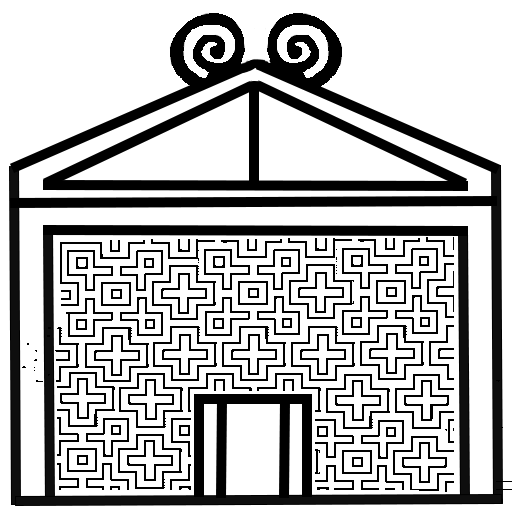
There are two small façades and one idol in Keskaya (Çatalkaya), a Phrygian settlement, 1.5 km west of the Karaalan village of Eskişehir. It takes its name (Kes-kaya means cut-rock, Çatal-kaya means fork-rock) from the rock mass located in the region that is cut open like a groove from above. It is located on the … Read more

Deliktaş

It is a small Phrygian fortress about 1.5 km north of the İnlice locality of Ovacık village in Kütahya. Its central location on the mountain range (i.e., the “Long Range” of Haspels) that divides the mountainous Phrygia in half was very strategic for communicating with other fortresses by sign. Even the Midas Kale is visible … Read more

Sülün

The small façade with a pitched roof and a triangular pediment is found near the Sülün town of Afyonkarahisar province. It is carved on a rock mass on a steep slope. The monument is relatively well preserved except for some minor destruction within its rectangular niche.   References:Tüfekçi-Sivas, T. & H. Sivas. 2003. ‘Eskişehir, Kütahya, Afyonkarahisar … Read more

Alanyurt Phrygian Inscription

Inscription MPhr-01 (Brixhe W-11)The white marble funerary stele with an 8-line Phrygian inscription was found by T. Drew-Bear in a field in the village of Alanyurt (17 km north of the ancient city of Dokimeion) in Afyonkarahisar. Unlike all other Old Phrygian inscriptions, which use the epichoric Old Phrygian alphabet, this inscription is written in the … Read more

Fındık Valley and Asar Kale

Fındık is a large Phrygian settlement located near Fındık village, about 25 km northeast of Kütahya. It is one of the most noticeable Phrygian sites in the highlands region, together with Göynüş and Yazılıkaya. It is situated in a narrow valley, on a small stream that flows north into a tributary of Porsuk. The northern … Read more

Burmeç

Burmeç rock façade is in a location called Çiçeklikonak Rocks, 2.6 km north of Bayramaliler village in İhsaniye district of Afyonkarahisar. The monument was first discovered by W. M. Ramsay in 1884. It was named Burmeç by Haspels after a nearby fountain with the same name. The local people call it Muskalı (a triangle‑shaped amulet) … Read more

Berberini Phrygian Inscription

Inscription W-02The inscription is engraved above the pediment of the façade. It is written dextroverse (from left to right).  iketaios ⁝ pseikạ? eḍ?[a]ẹ?s ‘Iketaios … made.’ References:Brixhe, C. & M. Lejeune. 1984. Corpus des inscriptions paléo-phrygiennes, Paris.Obrador-Cursach, B. 2018. Lexicon of the Phrygian Inscriptions, Thesis, Barcelona. Image Sources:Ben Claasz Coockson, 2016Sibel Bilgin, 2020

Phrygian Fortresses of Yazılıkaya Valley

There are four fortresses located on the high hills to the north and northeast of Midas City and Yazılıkaya Valley. They were built to protect the Midas City as well as the Phrygian settlements around it. The northernmost Akpara Kale also controls the Doğanlı Valley to the east. The other three fortresses, Gökgöz, Pişmiş, and … Read more

Döğer Valley

Döğer Valley, located 40 km north of Afyonkarahisar and 10 km northwest of Göynüş Valley, is a residential area used extensively by Phrygians. There are many Phrygian fortresses around the valley along with several monumental façades such as Aslankaya, Burmeç, Büyük Kapıkaya, and Küçük Kapıkaya. The vast majority of the monuments are located around Emre Lake to the east … Read more

Karababa Valley

It lies parallel to Göynüş Valley in the southeast. There are two Phrygian rock monuments discovered in the valley: a large shaft monument and a niche. Değirmen Yeri MonumentThis monument unfortunately no longer exists. It was discovered by Haspels in Karababa Valley in Kayıhan town of Afyonkarahisar province in 1950. Haspels identified two rock blocks … Read more